Everything you need for clay target shooting
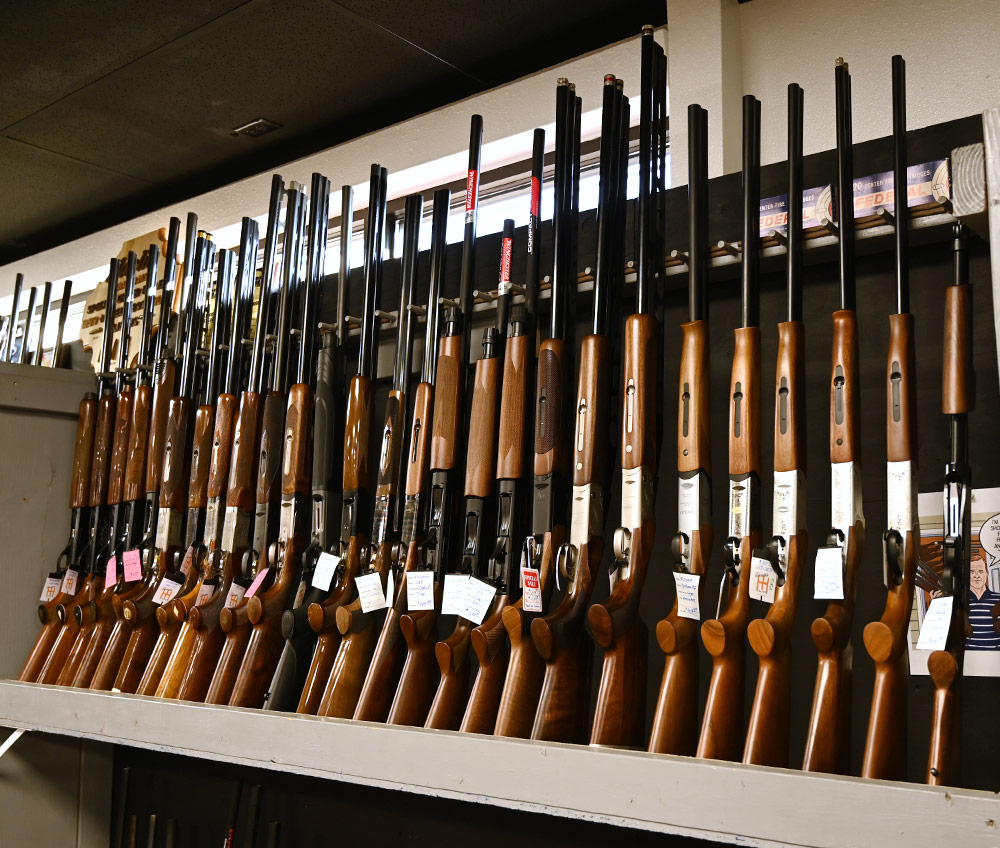
We always have great shotguns for trap, doubles trap, handicap, skeet, sporting clays and five stand in stock.
TriStar TT15 – We usually have a Double Trap over under and a combo available.
Beretta – Normal to have one to several Beretta clay target guns in stock. We often have both over under and auto loader Berettas available.
Remington – Many folks love the Remington 1100 and there are usually a couple in the shop.
Winchester – If you love a classic shotgun, there’s always a good selection of Model 12s in the shop.
Trap gun fitting – Buy an adjustable trap gun at HH and we will help set it up to fit you. Bought a gun at another dealer? No problem, we can still help – just make an appointment with Darryl. Trap gun adjustments take about an hour, require the shooter to be there and start at $100. A gun that fits is more pleasant to shoot and easier to consistently break birds with.

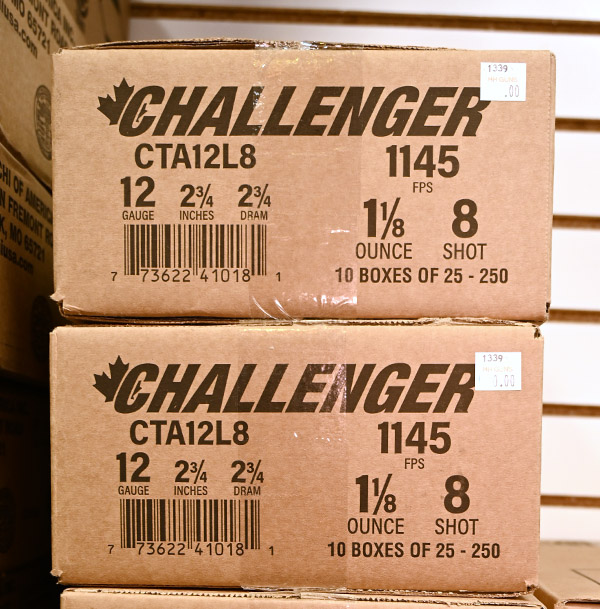
We have ammo in stock!
We carry a variety of shotgun ammo from great singles ammo to heavier-hitting shells for long yardage handicap. Don’t be afraid to ask for a little guidance too – we can help.
Trap ammo is sold by the case – 250 shells per case.
Information for new clay target shooters and parents
Events: In the clay target world, common events are singles, doubles and handicap trap, along with skeet, sporting clays and five stand.
Singles and double trap are shot on a trap field with the shooter standing 16 yards from where the target is thrown, also called the trap house. Singles trap features targets thrown one at a time with the competitor shooting five targets from five different stations. Doubles is similar, but two targets are thrown at a time. Handicap is like singles, but the competitor stands farther from the trap house based on her or his skill level. New young handicap shooters will start 19 yards from the trap house, experienced successful shooters shoot from as far as 27 yards from the trap house.
Equipment needed: Competitors need a shotgun. While many types of shotguns will work, people with a love for the sport usually choose adjustable purpose-built trap shooting guns. The prices can ranges from $1400 to five-digit price tags. Any shotgun with an exposed hammer is not usable because of safety concerns. Competitors will also need a pouch or specifically designed vest to hold shells, eye protection and ear protection. Prescription glasses work as eye protection. A pad to rest the shotgun on between turns is recommended as well. It reduces shooter fatigue. All of the gear is available at HH Guns.
Shooting glasses: Standard safety glasses will protect your eyes, but glasses with amber or orange lenses can help with target acquisition by filtering out blue light.
Length of Pull: Distance from the trigger to the butt of the shotgun. Often abbreviated as LOP.
Choke: The taper of the end of the shotgun barrel that helps shape the pattern of the shot. Some guns have interchangeable chokes, on others the choke is formed into the barrel. A full choke will keep the smallest pattern of shot at a distance, improved modified (IM) is slightly wider. Those are the preferred chokes for trap.
Over Under Shotgun: A shotgun with two barrels stacked on top of each other. Can be used for singles, doubles, skeet or sporting clays. Each barrel can have a different choke. Very common among competition shotguns.
Unsingle: A single-shot shotgun used for trap shooting where the barrel position looks like the bottom barrel of an over under shotgun.
Combo gun: A shotgun package that comes with both a single barrel, for singles trap and handicap trap and an over under barrel set.
Comb: Portion of the shotgun stock that the cheek is rested on. On competition shotgun, the comb is adjustable.
Rib: Flat site on the top of a shotgun barrel. Competition guns may have an adjustable rib.
Point of Impact: Where the center of the shot cloud hits the target. Sometimes abbreviated as POI.
12 gauge v. 20 gauge: Although it initially feels counterintuitive, a 12 gauge shotgun is often easier on the shooter than a 20 gauge. Many small stature shooters and parents mistakenly choose 20 gauge shotguns because of their light weight. If the competitor can comfortably hold the weight of the 12 gauge it’s a much better option. The added weight of the gun eases recoil and the additional shot headed toward the target is helpful too.
Ammunition: For standard trap shooting, more powerful ammunition does not give an advantage, it can do the opposite. Number 8 shot, 1 1/8 oz. 1145 fps or 1 oz. 1200 fps works well. It’s a great load that doesn’t have strong recoil allowing competitors to shoot throughout a day without bruising or pain. Competing in handicap trap events may require slightly more powerful ammunition because of the increased distance from trap house.
What makes a competition trap gun different from a field gun?
Competition guns usually have several features that field guns don’t. Among those differences are weight, adjustability and point of impact.
Weight: a light weight field gun is great, you might shoot a box of shells through it on a good day of hunting. During some trap shoots, a competitor could shoot a few hundred shells in a day. The added weight of a trap gun reduces felt recoil.
Adjustability: Having a shotgun that can be adjusted to fit the shooter improves comfort, consistency and scores. Finding a good baseline fit is a specialty of HH Guns – we will help you break more targets more consistently.
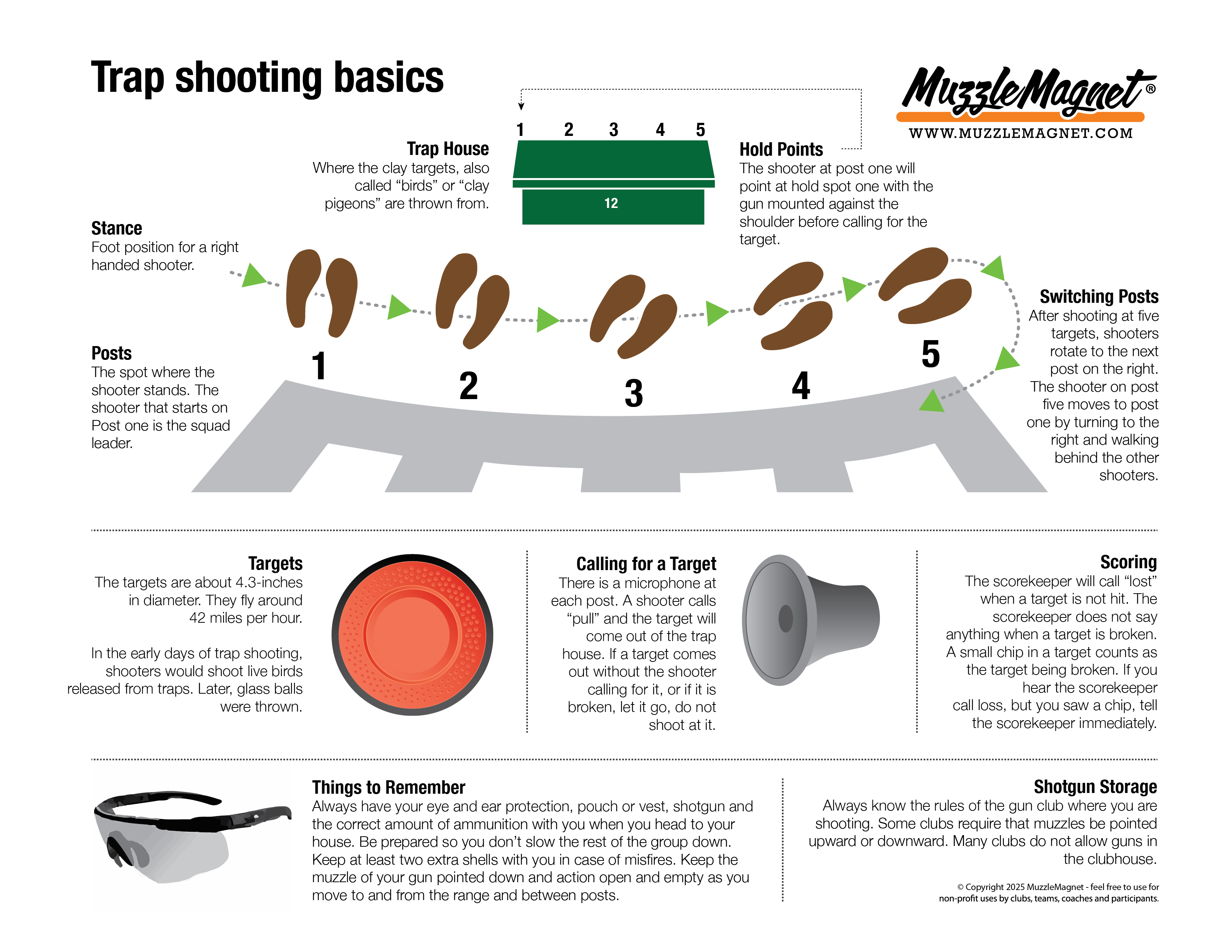
This graphic helps explain the basics of singles trap. The sport is great for all ages – grandparents can compete right next to children and grandchildren!